Food!
We wanted to write a separate post about Mongolian food as it’s been a bit of an unexpected highlight of our trip. We’d never eaten, or even heard much about Mongolian food, so beyond the heavy skew towards mutton and dairy products, we didn’t know what to expect. We were not disappointed.
Dumplings — mutton all the way
One of the most frequent foods we’ve had are dumplings, both steamed buuz and fried hushuur. Both are filled with a mix of chopped mutton, onion, black pepper and salt, which cooks with the dumplings, and both are delicious. Both end up quite soupy, and the filling should be slurped loudly out of a hole made with the teeth before the dumpling itself is eaten.
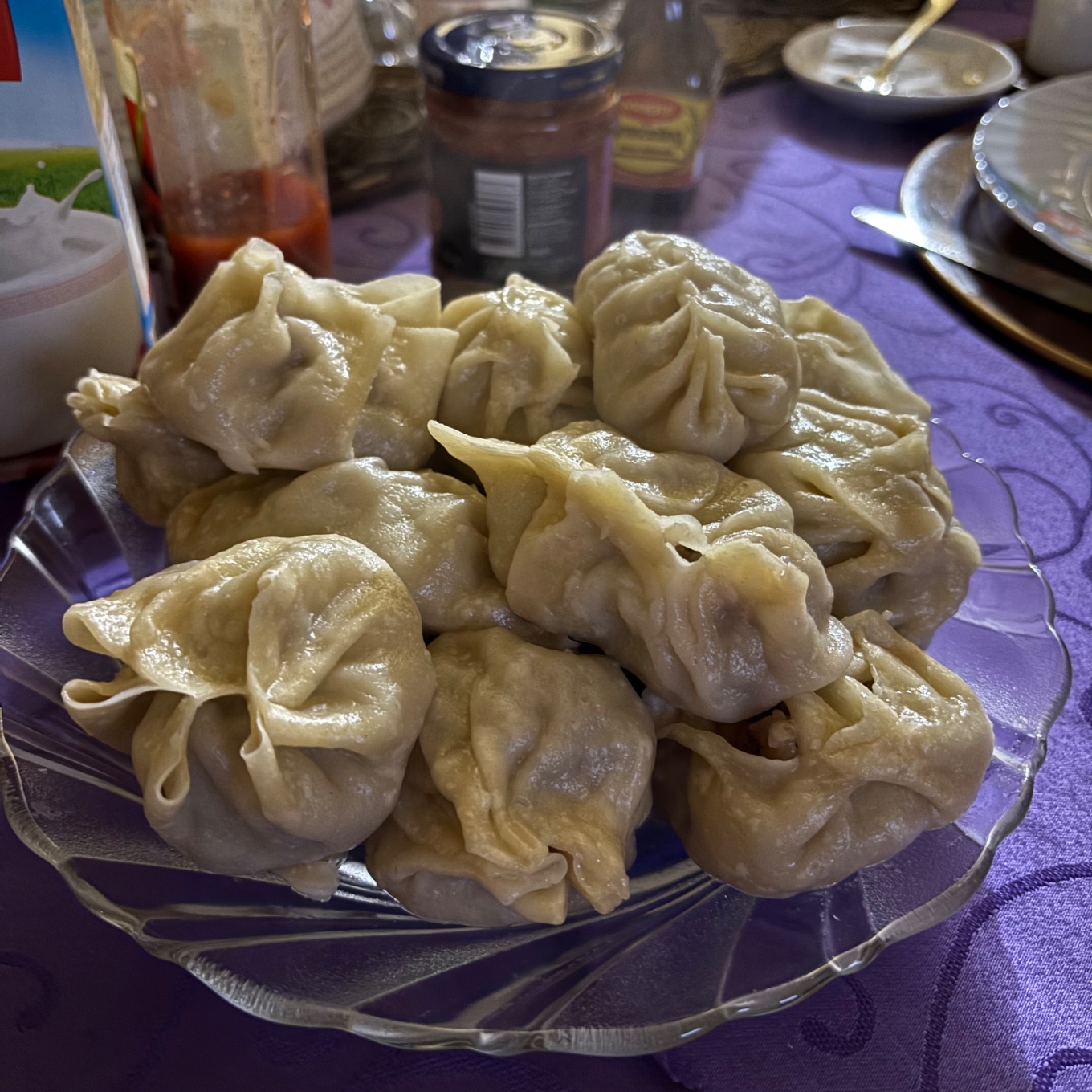
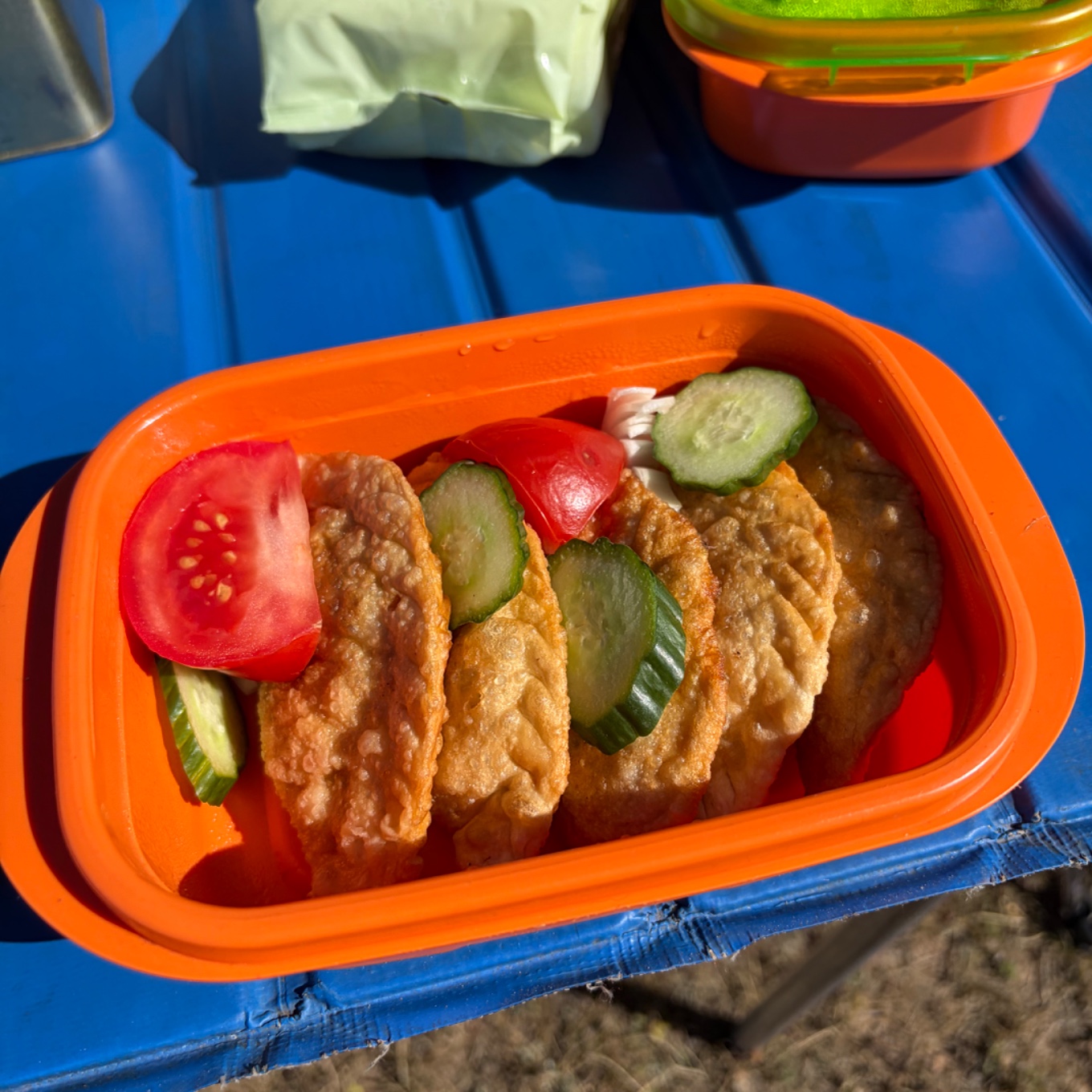
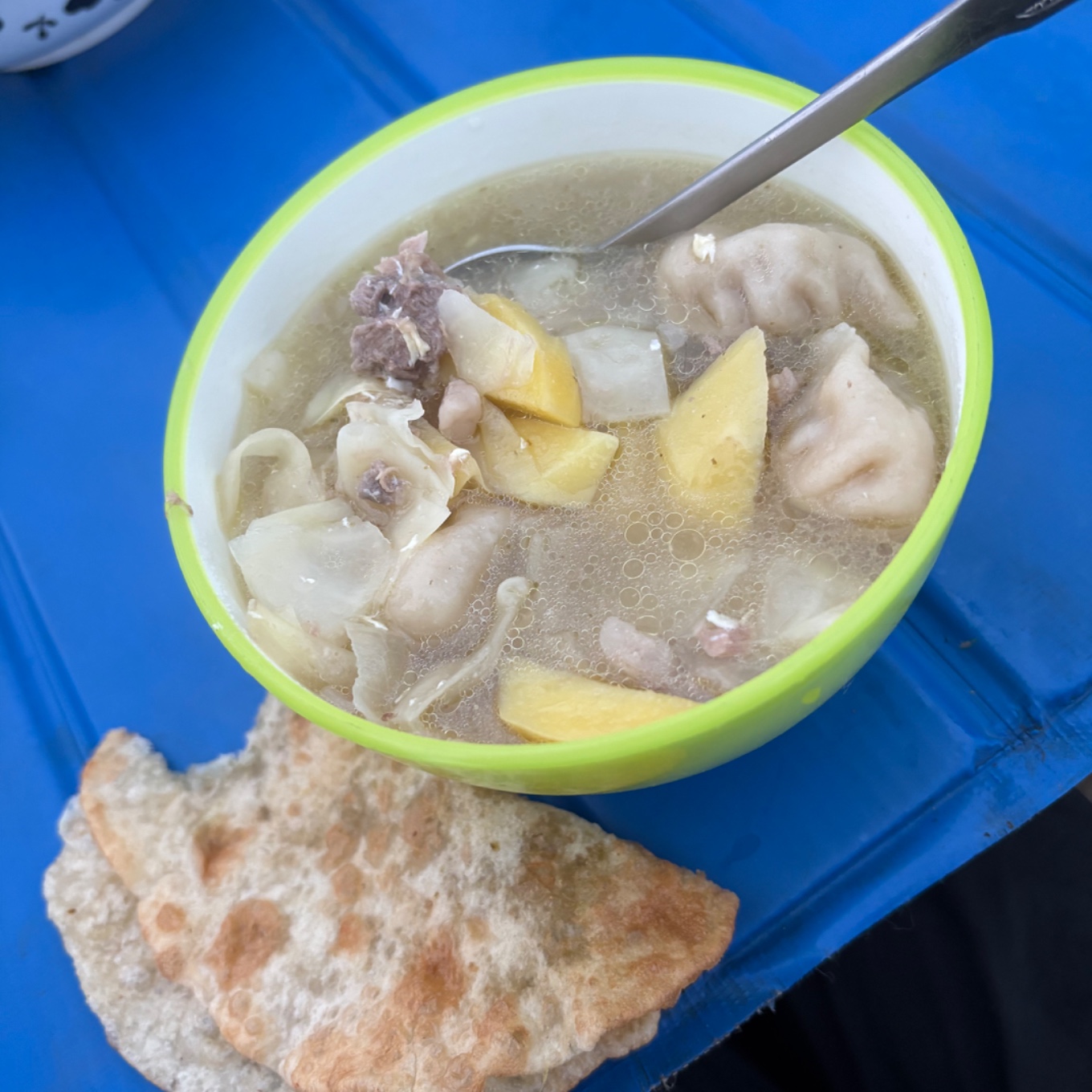
We tried making buuz twice and neither time could we manage anything remotely resembling the real thing, but both times our hosts very politely smiled and cooked them anyway.
Dairy products — milk tea and clotted cream
Mongolians, especially rural Mongolians, live off dairy products. All of their animals, except their scary dogs, are milked providing a continuous source of creamy protein year round.
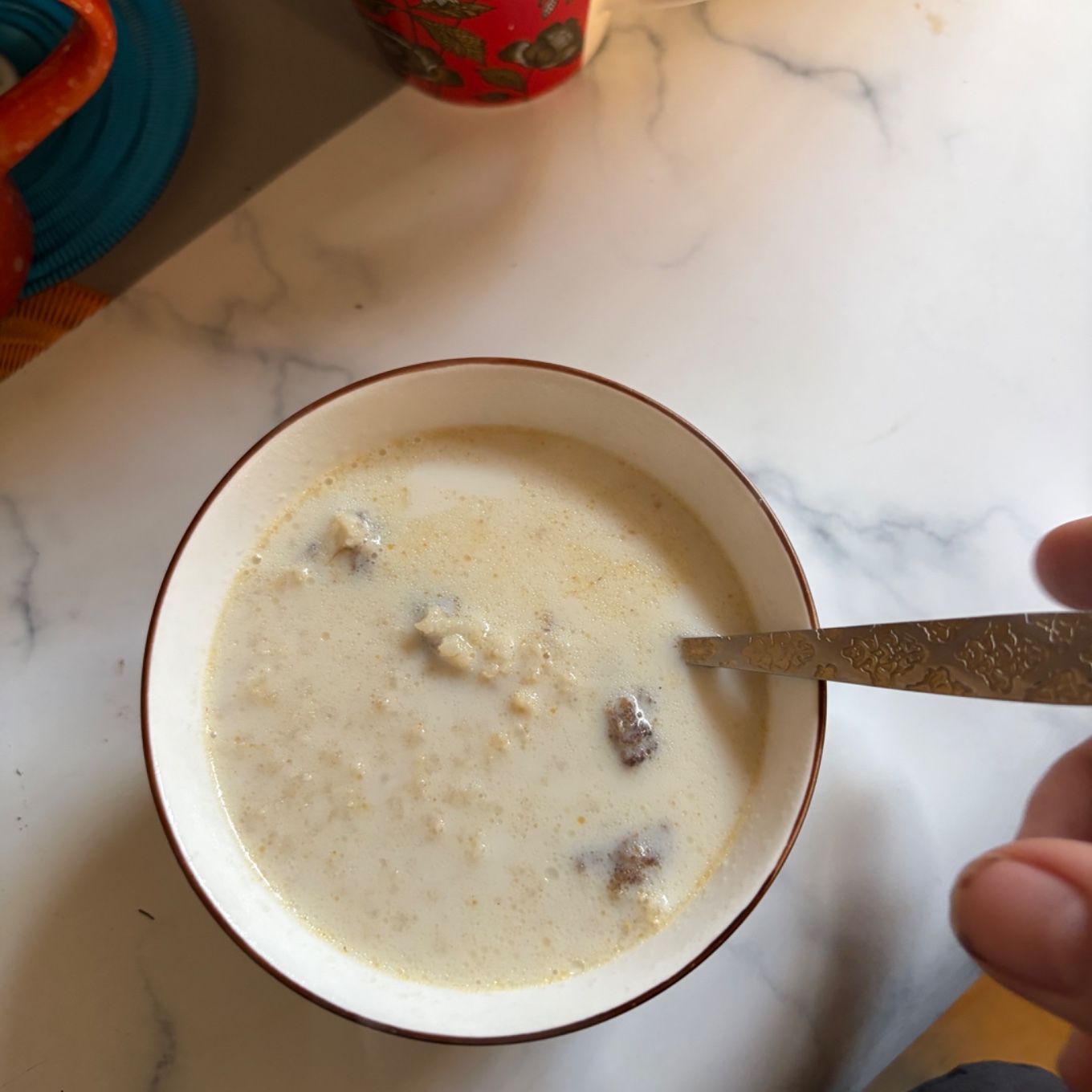
Whenever you arrive at someone’s ger, you will almost always be served a cup of milk tea. This staple drink is black tea made with half milk and half water, and a pinch of salt, although it’s not as salty as people often say. It’s quite subtle. Most gers have a big flask of this on the go at all times, and make another batch when it runs low. You can order it in restaurants and often they serve it for free. It sometimes becomes part of the meal itself; a classic breakfast being millet cooked in milk tea with chunks of roast meat or offal added in. Often milk tea is poured into dishes like tsuivan (fried noodles) to create a sort of milky soup, a useful trick when a packed lunch needs warming up.
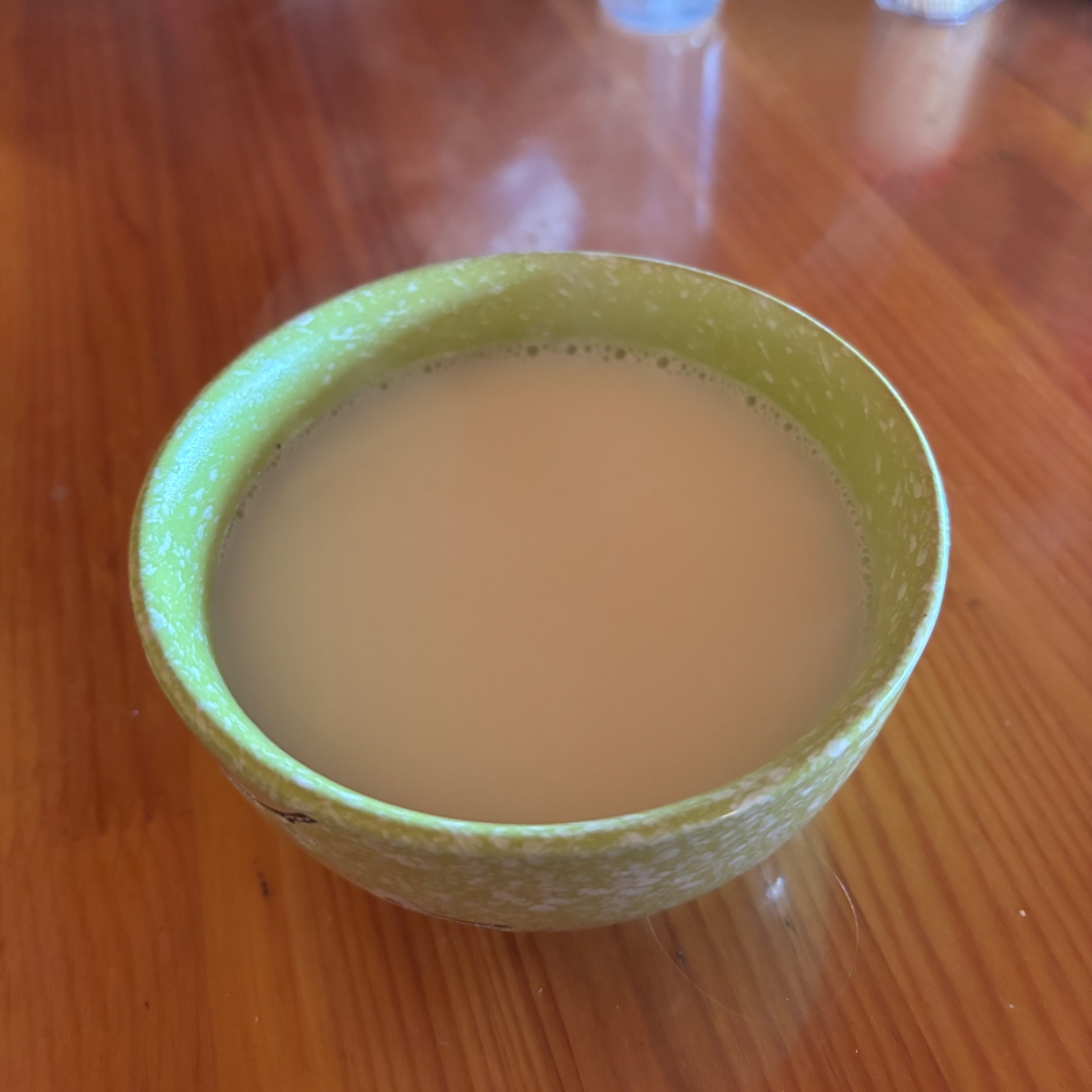
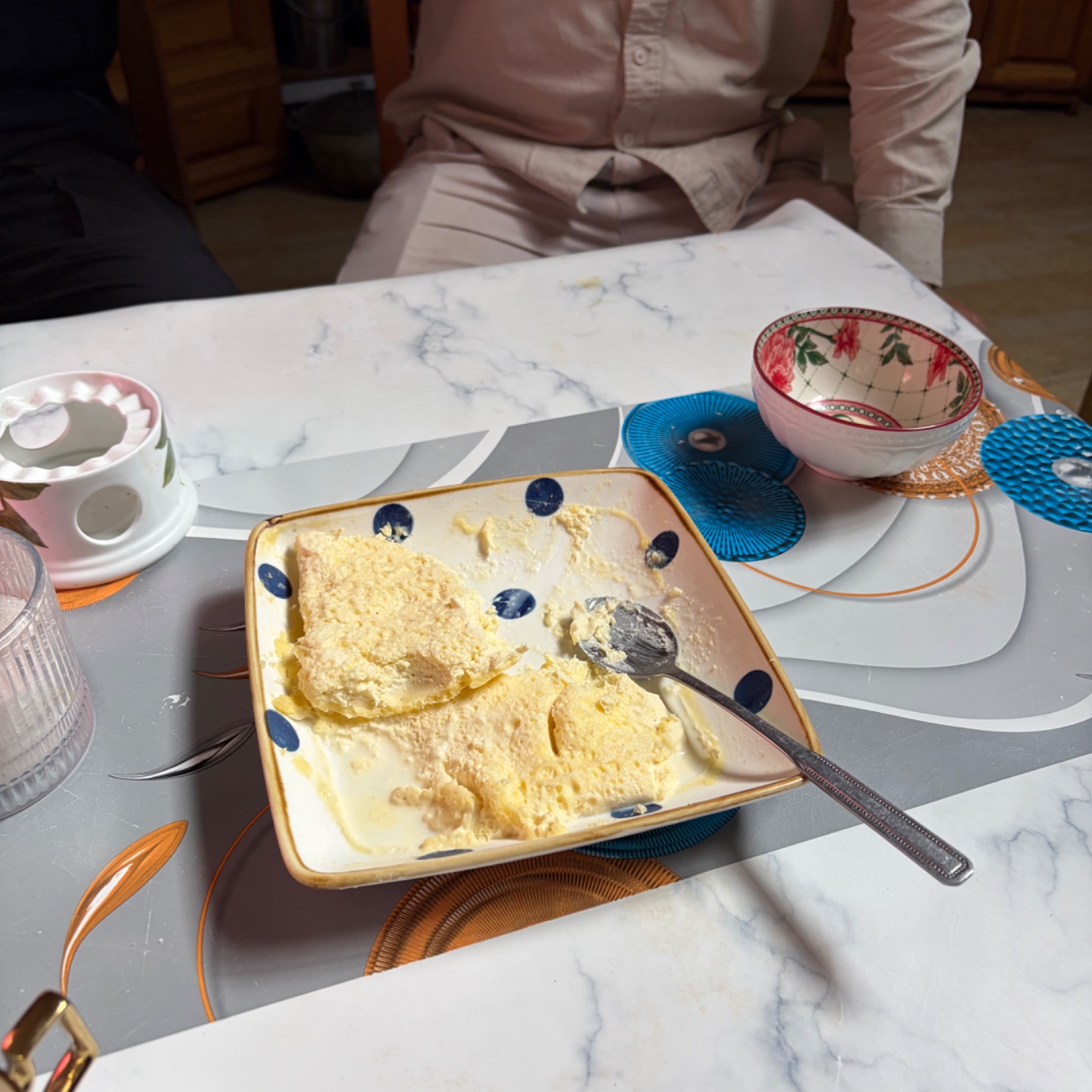
Another dairy product we’ve seen a lot is clotted cream. Many nomadic families keep a bowl full of homemade clotted cream on their tables all the time and guests can dip into it or add it to their food whenever they like. Con’s Cornish great-grandmother did the same, and it is one of a bizarrely large number of similarities between Mongolia and Cornwall, another being the pasty-like hushuur. The clotted cream is made with all kinds of milk; sheep, goat, cow, yak, horse or camel.
Staple dishes — and the addition of “communist vegetables”
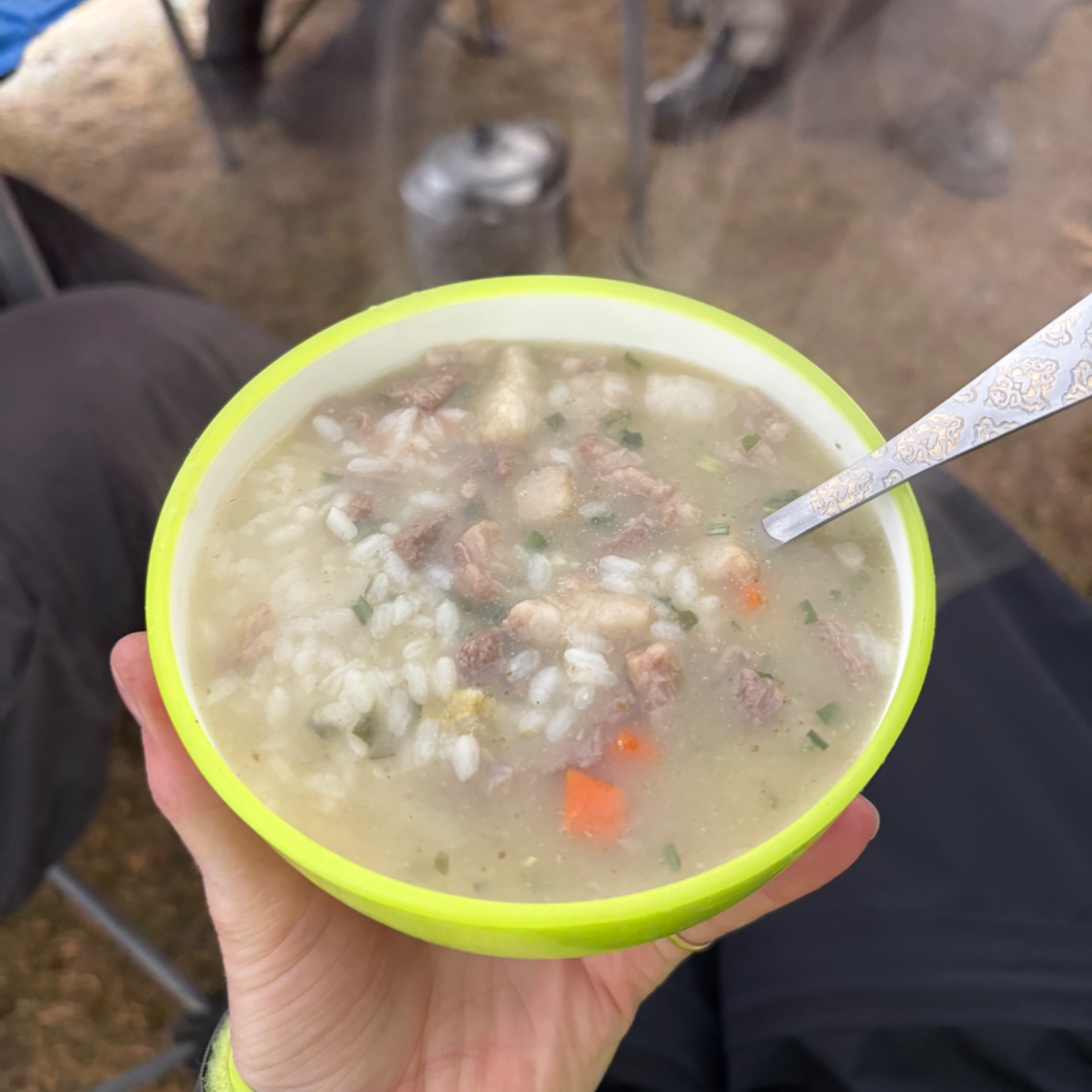
There a few dishes we ate a lot. Even when camping, these hearty and delicious bowls were brought out consistently. Generally everything is mutton or goat based. Yak, beef and camel appeared as well, but less often, and horse is eaten in the winter, but we didn’t see it.
Usually the meat is boiled and then served with either rice or noodles, cooked in the broth to make soup. Sometimes, it is cooked into fried rice or noodles. Onions, black pepper, carrots and potatoes are almost always added, but the latter two we were told are “communist vegetables”, meaning they were added during the communist era, and are not truly traditional.
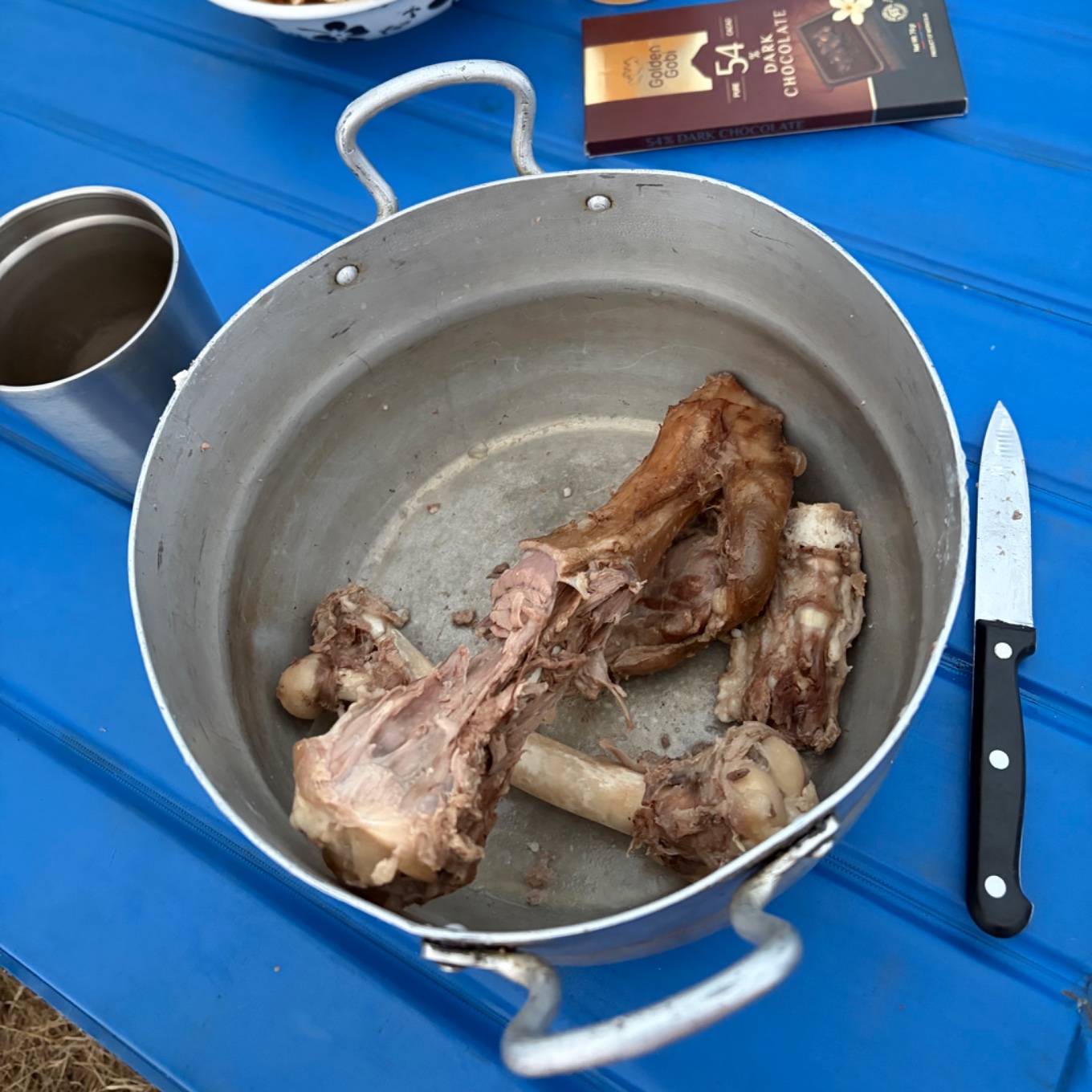
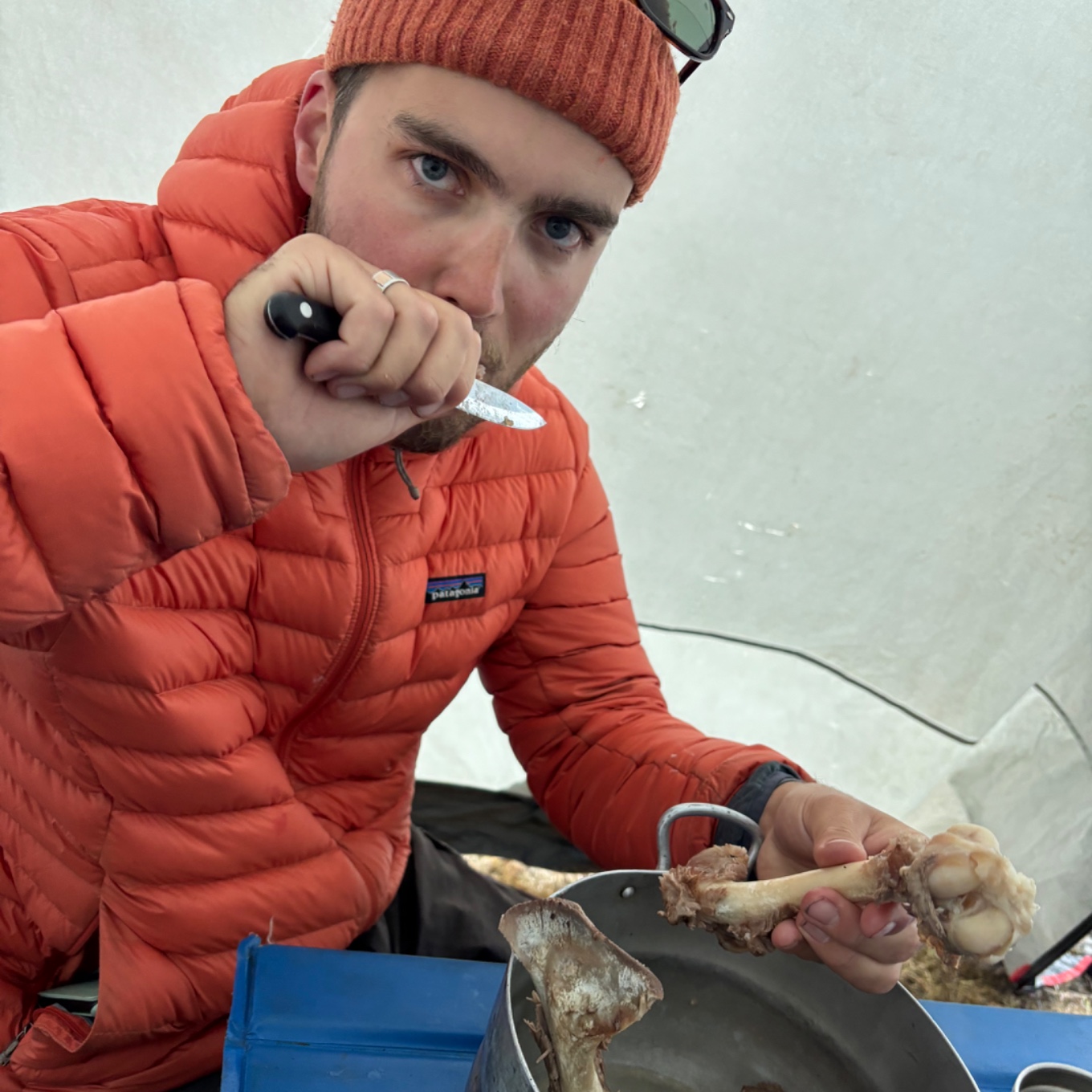
Every part of the animal is used; blood and intestines to make sausages, offal for nourishing soups, and skin to make warm clothes. As a snack, Mongolians will take leftover bones from previous meals and pick the remnants of the meat off with a pocket knife, then smash open the bones to suck out the marrow. The bones are thrown to the dogs. No part goes to waste.
Khorkhog — a special feast
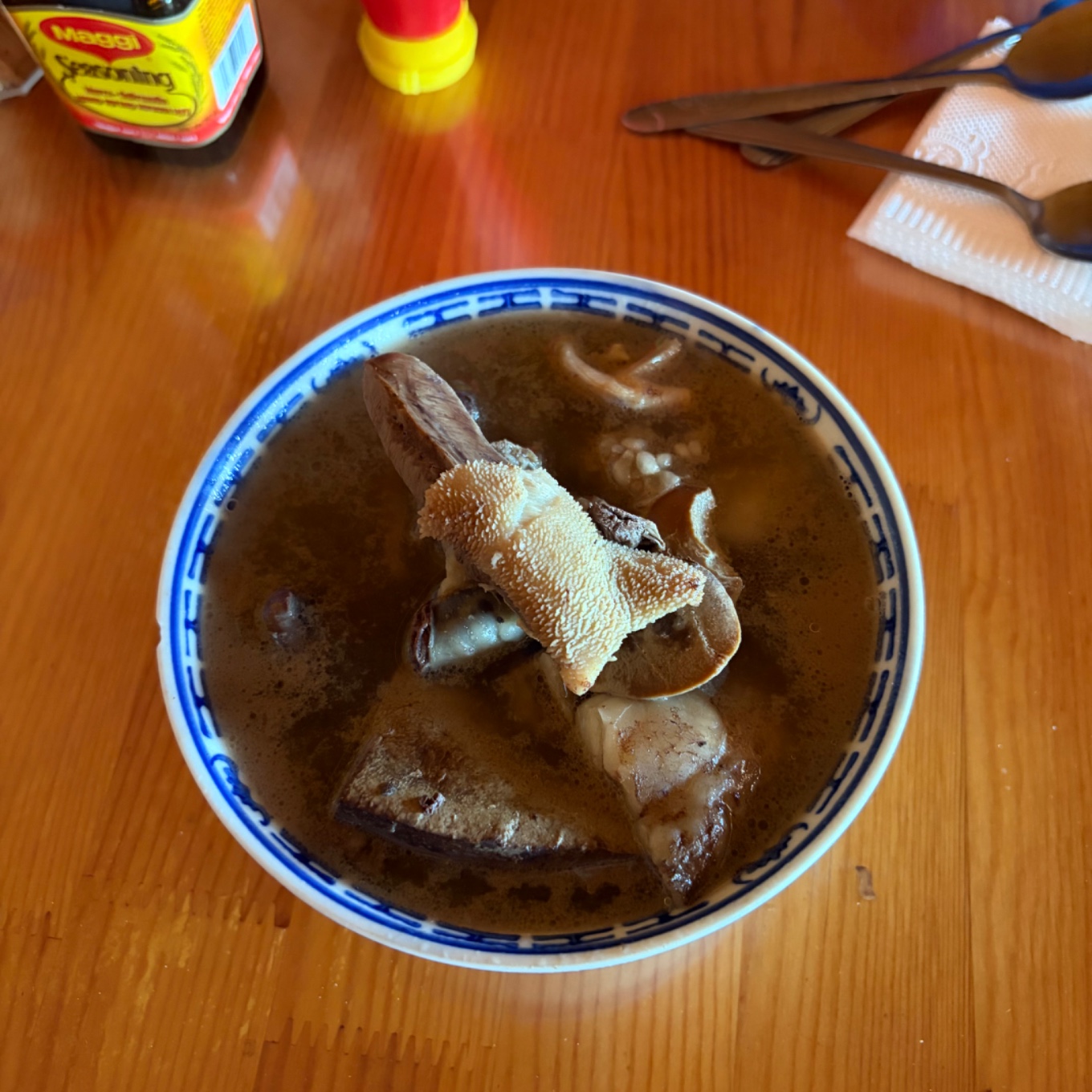
One evening, we were treated to Khorkhog; a stone-cooked barbecue of sorts, served on special occasions or for honoured guests. We’d heard a lot about this meal and were excited to try it.
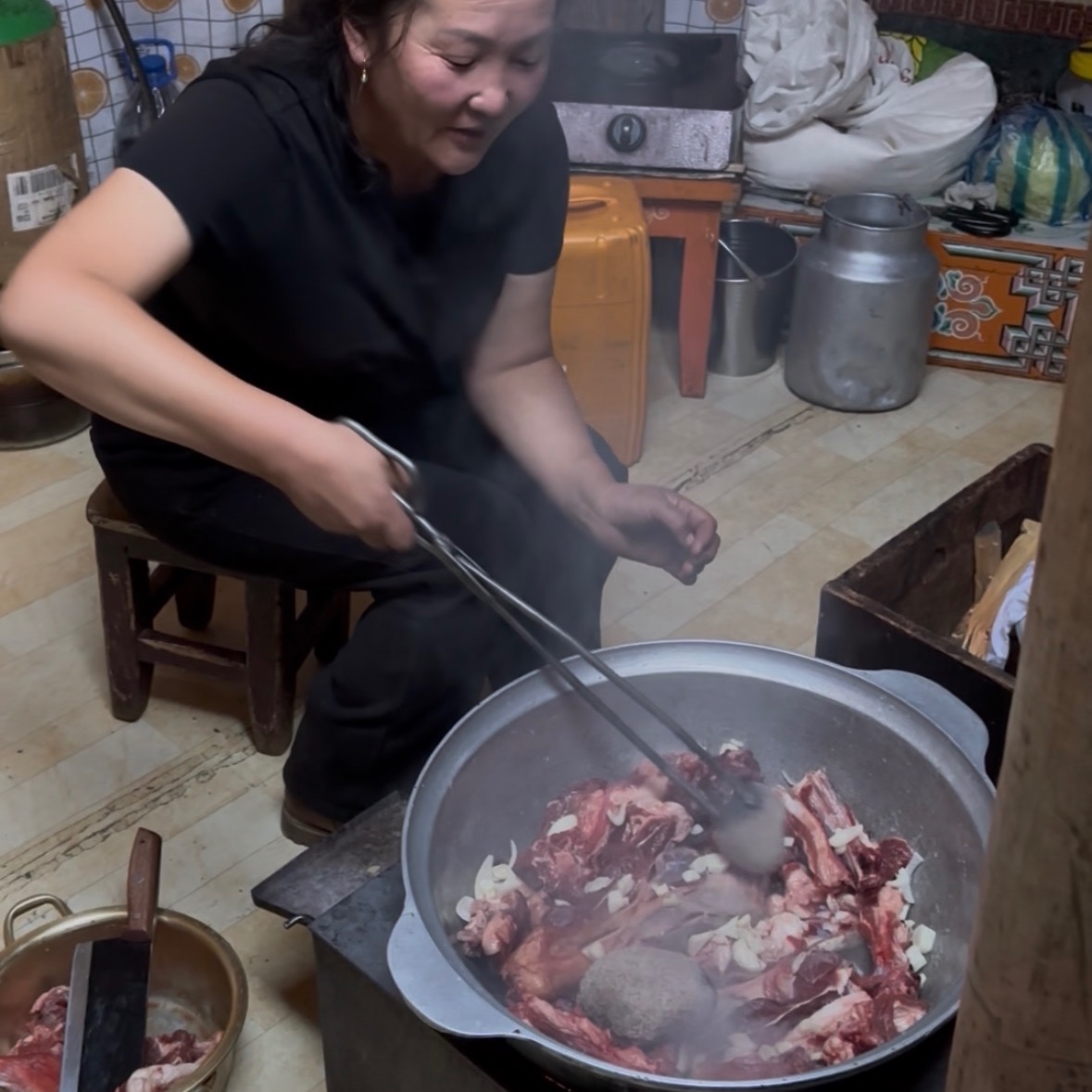
First, stones are heated in the ger stove until they’re red hot. Then, chunks of mutton on the bone are placed into a large wok with onions, salt, pepper and water. With a hiss, the hot stones are placed on top of the meat, simultaneously searing the parts they touch and boiling the water in the pot, starting a slow braising process. Next, the “communist vegetables” are added, and the dish is covered. During the hour’s wait, dough is rolled out and a game or two of Mongolia whist can be played. At the last moment, the flatbread is added on top of the meat to cook to absorb the flavours. Additionally, a sheep’s head and a sausage made of blood and intestines is added, but we were caught up in the card game and didn’t see this.
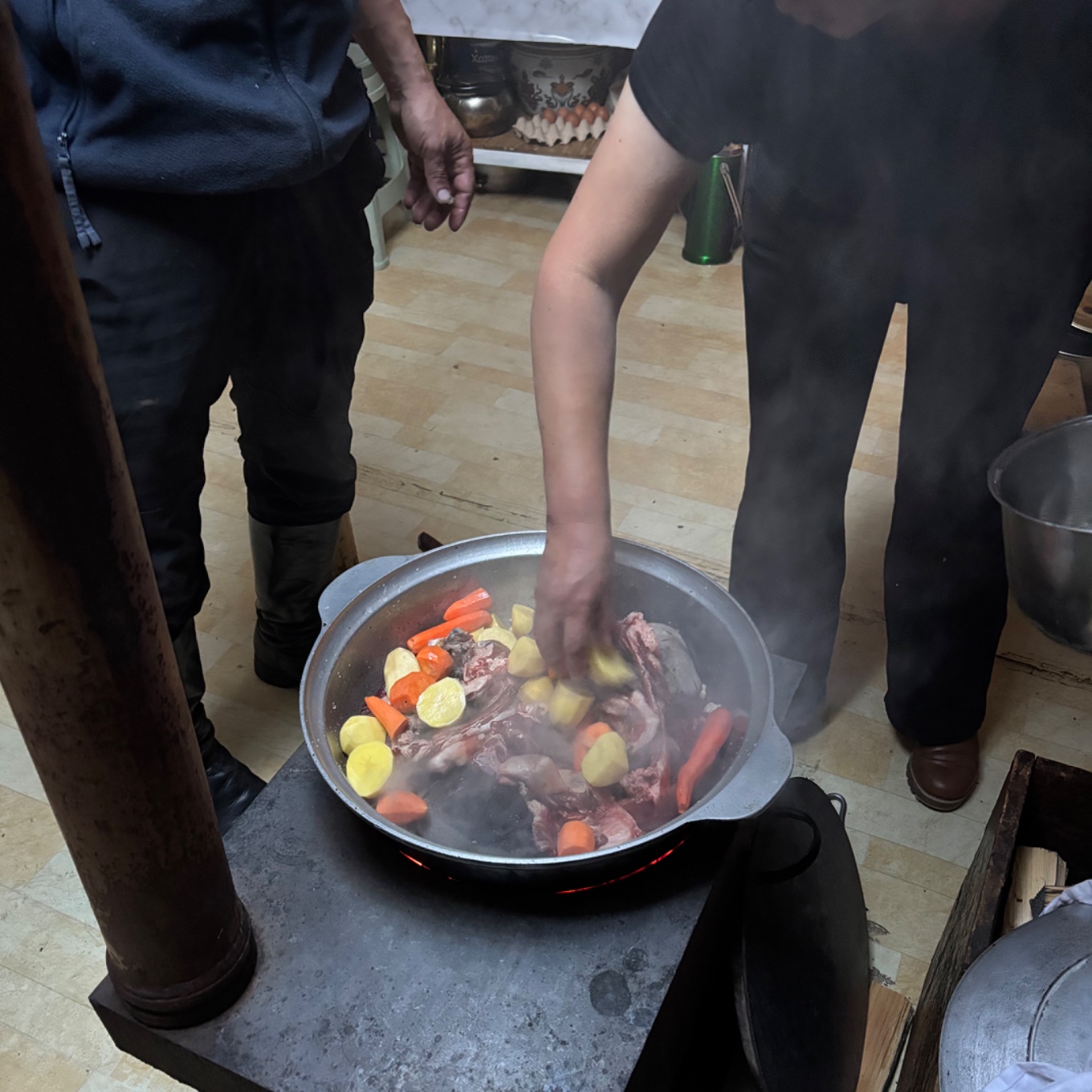
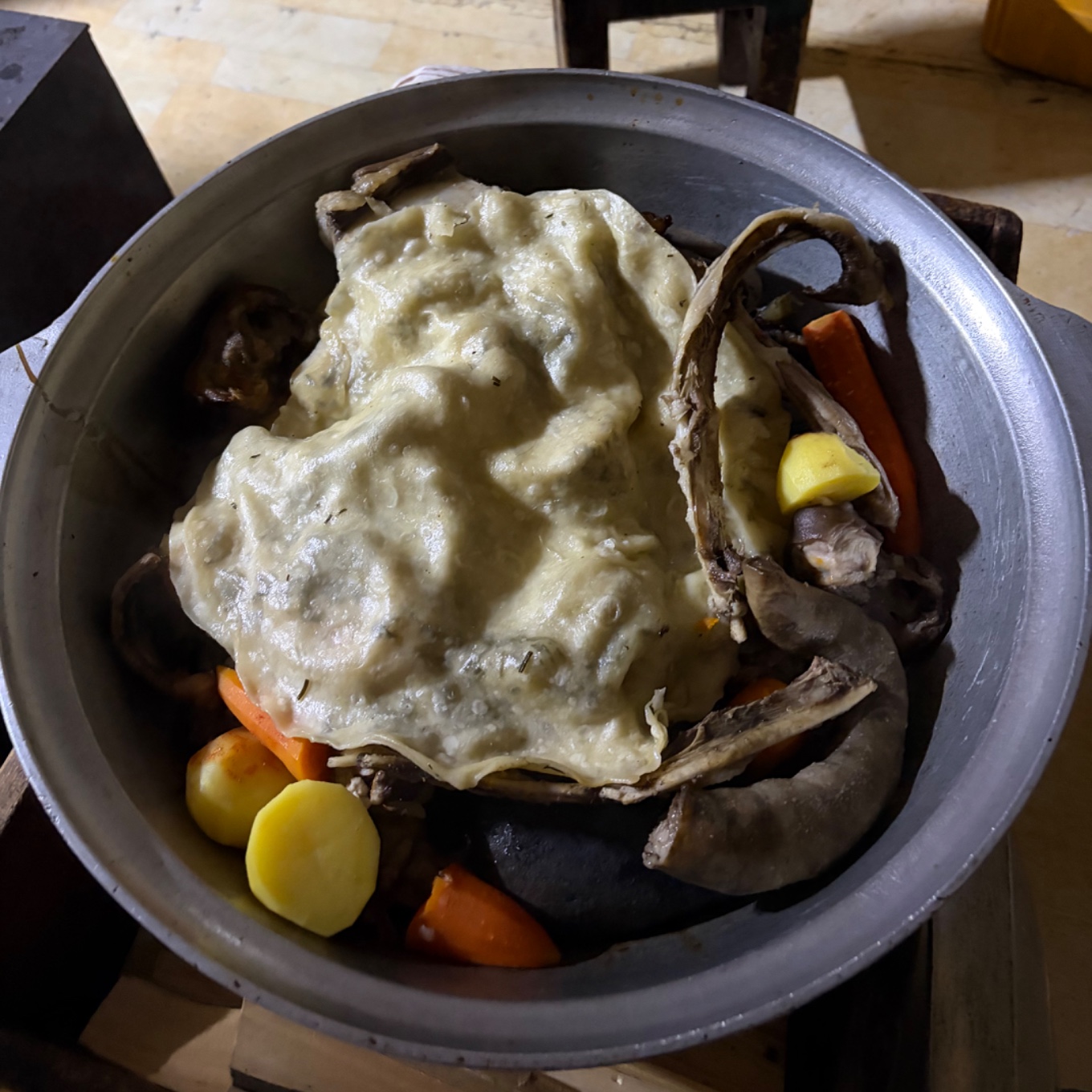
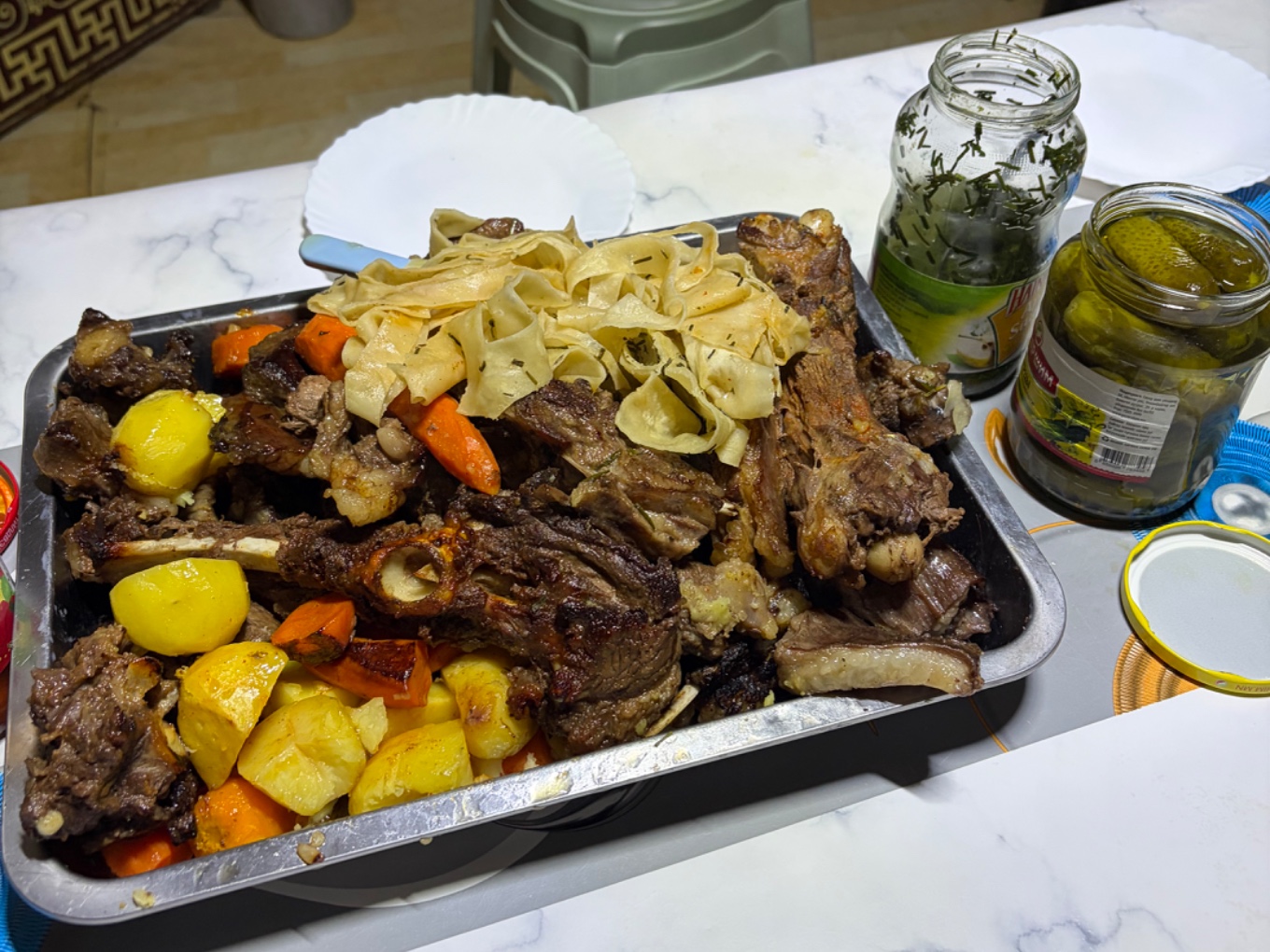
The result is an unbelievably decadent tray of meat and vegetables; somewhere between a barbecue and a Sunday roast. This is placed in the middle of the table and eaten with hands and pocket knives. By custom, the shoulder blade is shared between everyone. The meat is eaten with sweet soy sauce and pickled Gobi chives (which we saw growing everywhere). It was delicious, and a very special evening.
Vodka — to warm the bellies
Mongolian food wasn’t the only thing keeping us warm. Mongolians love their vodka and we drank it often, and in a couple of different forms.
The first form is simply vodka drunk around the campfire in the evening. Each person takes it in turn to sing a song for the group before drinking a giant shot. We grew to love this game, although we found it very hard to learn any Mongolian songs.
The second form of vodka we encountered was a weaker variety, made from distilled fermented yoghurt. It is warmed in a kettle with a little ghee, and then served in a silver bowl by the host.
This process, like many in Mongolia, is governed by etiquette. The host will fill the bowl with vodka, and pass it to the guests one by one. Each guest will accept the bowl with their right hand, left hand supporting the elbow, dip their ring finger into the liquid and flick some up into the air as an offering to the sky before drinking. If the guest doesn’t want to drink it, they can dip their finger and touch it to their forehead, showing gratitude. The bowl is then returned to the host, who will refill it and move onto the next person, and the process is repeated.
It’s fair to say that Mongolian food completely surpassed our expectations, and we hope you can see why! We’re planning on hosting a Mongolian themed dinner when we return, complete with all the above delicacies, vodka singing and a set of 30 sheep’s ankle bones for playing traditional games. Hopefully we’ll see you there.
Jack I am very surprised that you weren't a natural at the dumplings, given your illustrious career as a pastry chef
I let the side down I have to admit
This is magnificent. Alf is licking his lips
Food looks lovely in part. I might pass on the sheep’s head and picking at left over bones! Did they appreciate your fine tuned singing Jack?
And now I’m craving yak dumplings. Loooove this, keep the food updates coming !!! And the other updates too
Vivid descriptions of the food! My invitation to next year's Mongolian feast is eagerly awaited.
